

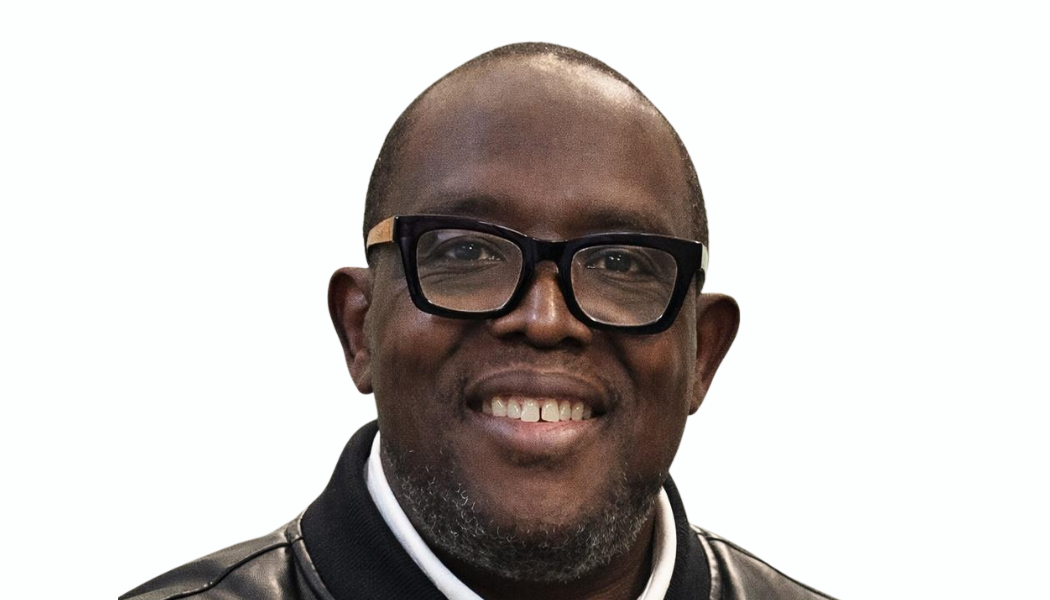
A physician investor bringing healthcare, capital, and governance insight to founders across Africa
Bridge Africa Technologies is pleased to announce that Dr. Olusegun Bamidele Oso will serve as one of the judges at the BAT Hackathon 2022. His appointment signals a clear message to founders and innovators across the continent: this is a competition that takes both impact and execution seriously.
Dr. Oso is a physician turned finance and investment leader who has spent nearly three decades working at the intersection of healthcare, capital markets, and corporate leadership across Africa and the diaspora. He has moved from the consulting room to the boardroom, from treating patients to shaping how large pools of capital are allocated to hospitals, diagnostic platforms, and technology enabled services. That mix of clinical experience, financial discipline, and board level governance makes him a strategic addition to the BAT Hackathon 2022 judging panel.
This year’s hackathon includes strong tracks around health and social impact, capital formation, and institutional resilience. Dr. Oso will bring his experience to three core judging categories that align closely with his record up to 2022: Healthcare Investment and Impact Driven Innovation Projects, Private Equity, Capital Structuring and Growth Strategy Innovation Projects, and Business Process Governance, Risk Management, and Operational Efficiency Solutions.
From Clinical Practice to Capital Allocation
Dr. Oso began his professional life in clinical medicine after completing his medical training at the University of Ibadan. Working in a demanding public health environment, he saw first hand how gaps in infrastructure, equipment, staffing, and funding limited what even the most committed clinicians could achieve. It was a practical education in the consequences of underinvestment and fragmented systems.
Rather than remain in traditional clinical practice, he chose a more difficult route. He deliberately stepped into banking and financial services so that he could influence the upstream decisions that determine which projects get built, which hospitals expand, and which businesses are able to scale. It was a shift from individual patient care to system level problem solving.
Over the years, he built a strong track record across leading banks, advisory firms, and global professional services organisations. He worked on complex transactions that cut across manufacturing, financial services, real estate, infrastructure, and healthcare. In these roles he sharpened his skills in valuation, mergers and acquisitions, fundraising, and restructuring, and became known for his ability to translate strategy into bankable structures that attract serious, long term capital.
That journey gave him a broad view of how capital moves in and out of African markets, which risks investors are willing to take, and what founders must demonstrate to be seen as credible partners. It also confirmed his conviction that healthcare and essential services in emerging markets need more focused, patient capital and better designed platforms.
Building Healthcare and Impact Driven Platforms
Over time, Dr. Oso concentrated his efforts around a clear mission: helping to build stronger healthcare and impact driven platforms in emerging markets. As a senior leader in private equity and healthcare funds focused on Africa, including the Africa Health Fund and the Evercare Health Fund, he played key roles in originating and closing significant investments in hospitals, diagnostic providers, pharmaceutical distribution, and insurance.
He was directly involved in the development of investment theses, building of pipelines, negotiation with promoters, and structuring of transactions. His work covered both the technical side of deals and the practical realities of what it takes to grow healthcare businesses that must balance clinical quality, affordability, and financial sustainability. In that capacity, he originated and closed more than 300 million dollars in healthcare transactions and led thesis development for the Evercare Health Fund.
He also co founded the Nigeria Healthcare Development Fund, a specialist vehicle designed to channel local and international capital into healthcare assets in West Africa. The fund was conceived in response to clear financing and infrastructure gaps, and it reflects his commitment to designing instruments that match local realities while still meeting investor expectations.
Parallel to his fund work, Dr. Oso has served on boards across insurance, healthcare, technology, and leasing. At this level, he has contributed to audit, finance, risk, and governance committees, helping to shape oversight frameworks and support executive teams facing complex operational and regulatory environments.
This combination of roles gives him insight into the full lifecycle of an innovation: from early idea to fundable project, from growth pains to institutionalisation, and from founder led operations to board level governance and strategic exits.
Category 1: Healthcare Investment and Impact Driven Innovation Projects
One of Dr. Oso’s primary judging areas at BAT Hackathon 2022 will be Healthcare Investment and Impact Driven Innovation Projects.
This category is grounded in his portfolio work on the Africa Health Fund and Evercare Health Fund, where he helped originate, structure, and close major healthcare transactions across West Africa. The evidence is clear. He has been part of teams that deployed over 300 million dollars into hospitals, diagnostic networks, pharmaceutical distribution platforms, and related health services. He led or contributed to investment thesis development, structuring, negotiation, and post investment value creation in these funds.
BAT often features health and social impact tracks. Many of the solutions in these tracks seek to use technology, data, and new business models to close gaps in access, quality, and affordability. Having a judge who not only understands clinical realities but has also sat across the table from founders, assessed their numbers, questioned their assumptions, and structured their funding is a significant advantage.
Dr. Oso is well placed to evaluate whether a health focused solution is more than a good idea. He can assess whether the problem definition is precise, whether the model can scale beyond a pilot, whether regulatory and reimbursement landscapes have been considered, and whether the economics make sense for both investors and end users. He is also sensitive to the impact dimension, since his experience with healthcare funds involves explicit impact objectives alongside financial returns.
For founders competing in this category, his presence signals that BAT is looking for health innovations that can survive real world scrutiny. Teams can expect questions that link their technology to clinical pathways, their pricing to real purchasing power, and their expansion plans to realistic capital structures.
Category 2: Private Equity, Capital Structuring, and Growth Strategy Innovation Projects
The second core judging category for Dr. Oso is Private Equity, Capital Structuring, and Growth Strategy Innovation Projects.
This focus is linked to his work at Actis, where he served as a Portfolio Manager overseeing investments across multiple African markets. At Actis, he was responsible for valuation, investor reporting, board representation, and value creation for assets spread across Nigeria, Ghana, Togo, Kenya, Uganda, and Lusaka. That portfolio role required him to understand sector dynamics, management quality, regulatory risk, and exit pathways in each context.
In this category, BAT Hackathon 2022 will spotlight solutions, platforms, and tools that address questions of capital formation, early stage investment readiness, scalable financial models, and business expansion strategies. These could range from fintech tools and investment platforms, to analytics that help investors evaluate risk, to new models for financing infrastructure or essential services.
Dr. Oso’s experience sits exactly at that intersection. He has seen how investors think about risk, how they price capital, what they look for in governance structures, and where promising ventures tend to fall short. He also understands the constraints on the founder side: thin management bandwidth, evolving markets, and often volatile policy environments.
As a judge, he will be able to assess whether a proposed model genuinely improves how capital is raised, deployed, and monitored. He will look for clarity in value proposition, coherence between growth plans and capital structure, and seriousness in how teams think about investor communication, reporting, and governance. His background in valuation and portfolio oversight means he will be quick to see whether financial projections and impact claims are grounded in reality or simply aspirational.
For teams focused on capital markets, investment technology, or scalable growth strategies, engaging with a judge who has managed complex multi country portfolios is an opportunity to validate assumptions against the standards of institutional investors.
Category 3: Business Process Governance, Risk Management, and Operational Efficiency Solutions
The third judging area for Dr. Oso is Business Process Governance, Risk Management, and Operational Efficiency Solutions.
This category draws on his long term board level and strategic governance work across insurance, healthcare, technology, and leasing organisations. Across these roles, he has contributed to audit, finance, risk, and governance committees, where he has helped design control frameworks, oversee risk registers, and support management in implementing operational improvements.
BAT Hackathon frequently features themes around digital transformation, operational innovation, and institutional resilience. Solutions in this category often aim to streamline processes, strengthen controls, improve compliance, or make internal operations more transparent and efficient. They sit at the junction of technology, process design, and organisational behaviour.
With his background, Dr. Oso understands that governance and risk management are not abstract concepts. They affect whether an institution survives shocks, whether it can access capital, and whether partners trust it. He also appreciates that for growing organisations, especially startups and scaleups, governance needs to be practical and proportionate, not heavy handed.
As a judge, he will bring a pragmatic lens to evaluating tools and systems that claim to enhance governance or efficiency. He can test whether a solution genuinely reduces risk rather than simply adding layers of reporting, whether it integrates with existing workflows, and whether it can scale as an organisation grows. His board experience also positions him to see how innovation in this space can help boards and executive teams make better decisions with timely, reliable information.
For teams working on compliance tech, risk analytics, process automation, or operational dashboards, his feedback is likely to focus on usefulness, adoptability, and alignment with real governance needs.
Academic Foundation and Cross Sector Perspective
Underpinning Dr. Oso’s professional journey is a strong academic base. He holds a medical degree from the University of Ibadan, which anchors his understanding of health systems and clinical realities. He also holds an MBA from the Sloan School of Management at the Massachusetts Institute of Technology, complemented by further training in computing and financial analysis.
This combination allows him to move comfortably across technical, financial, and strategic discussions. When reviewing hackathon projects, he can follow the logic from problem statement to technology choice, from business model to funding structure, and from operational plan to governance framework.
His cross sector board roles in insurance, healthcare, technology, and leasing also mean that he has seen how different industries respond to digital disruption, regulatory pressure, and shifts in customer expectations. That breadth is valuable in a hackathon environment where teams are not only competing within their verticals, but also learning from patterns across sectors.
A Signal of Seriousness to Founders and Innovators
For Bridge Africa Technologies, the appointment of Dr. Olusegun Bamidele Oso as a judge for BAT Hackathon 2022 is more than a profile announcement. It is a statement about the kind of conversation the platform wants to host.
His presence on the judging panel signals that BAT is committed to depth, not just visibility. Teams can expect careful questions on impact, scalability, governance, and financial viability. They can also expect to be assessed by someone who understands both the constraints of emerging markets and the expectations of institutional capital.
For innovators, founders, and impact driven teams across Africa, this is an invitation to bring thoughtful, well designed, and execution ready solutions to the table. Whether they are building in healthcare, financial systems, or enterprise transformation, they will be engaging with a judge who has spent his career working at the same intersections they are trying to navigate.
As BAT Hackathon 2022 unfolds, Dr. Oso’s role on the panel will contribute to a more rigorous and grounded evaluation process. His journey from medicine to finance, and from individual practice to system-level investment, reflects the kind of integrated thinking that African innovation now demands.
For participants, it is an opportunity to test their ideas against real-world standards and to receive feedback shaped by decades of experience in healthcare investment, private equity, and governance. For the wider ecosystem, his involvement is a reminder that meaningful innovation requires not only creativity but also structure, discipline, and a clear path to impact at scale.