
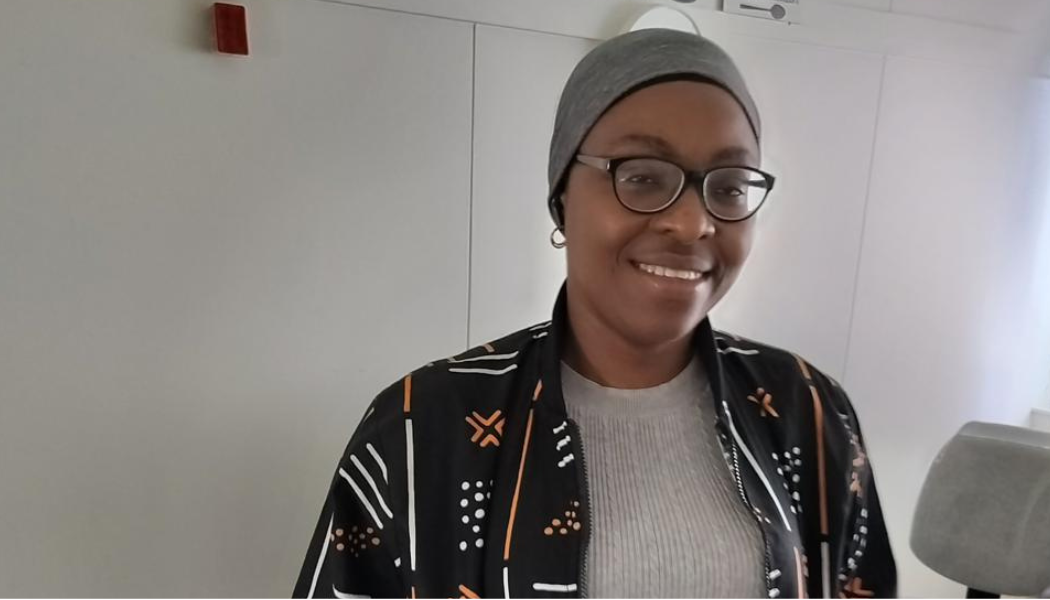
Bridge Africa Technologies has announced the appointment of Ms Rasheedah Fola Abioye as one of the judges for the BAT Hackathon 2021. Her inclusion on the judging panel reflects a deliberate decision to strengthen the technical, analytical, and sustainability-focused depth of the hackathon evaluation process.
The BAT Hackathon is designed as a platform for innovators, developers, researchers, and entrepreneurs to propose solutions that address practical challenges using technology, data, and applied knowledge. As such, the credibility of the judging panel is central to the integrity and impact of the program. Ms Abioye’s professional background and experience up to 2021 align closely with the core objectives of the hackathon, particularly in areas of innovation, sustainability, and execution.
A geoscientist by training, Rasheedah Fola Abioye brings a career shaped by hands-on fieldwork, applied analysis, and project support across mineral and water-related initiatives. Her professional journey demonstrates steady development from foundational technical roles to positions that required judgment, coordination, and oversight. This progression forms the basis of her suitability as a judge for a competition that values both creative thinking and practical feasibility.
A Foundation Built on Geological Investigation and Applied Science
Ms Abioye’s early professional experience was grounded in geological investigation. She was involved in sample preparation, laboratory analysis, and technical reporting, tasks that require precision, discipline, and a clear understanding of scientific processes. Through this work, she developed strong analytical skills and an ability to translate raw data into structured findings that support decision-making.
These foundational roles were critical in shaping her approach to problem-solving. They required attention to detail, consistency in methodology, and accountability for results. Such attributes are essential when evaluating hackathon projects, where innovative ideas must be supported by sound logic and evidence rather than assumptions.
Her early exposure to data analysis also built a lasting appreciation for accuracy and transparency. This perspective enables her to assess whether proposed solutions are grounded in reliable data and whether conclusions logically follow from the methods applied. For a technology-driven competition, this skill set supports fair and informed evaluation.
Field-Based Experience and Real-World Context
Beyond laboratory and desk-based work, Ms Abioye gained extensive field experience. She participated in site assessments, geological mapping, and data collection activities related to solid minerals and water resources. These roles required working in varied environments and adapting scientific methods to real-world conditions.
Fieldwork provides practical insight that cannot be gained through theory alone. It reveals the constraints, risks, and variables that affect project outcomes. Through her involvement in field-based tasks, Ms Abioye developed an understanding of how solutions must account for environmental, logistical, and operational realities.
This experience positions her well to evaluate hackathon entries that propose applied solutions. She can assess whether ideas are adaptable to real conditions, whether assumptions are reasonable, and whether proposed methods are scalable beyond conceptual stages. Such evaluation is particularly relevant for innovations that claim to address community, environmental, or infrastructure challenges.
Geoscience Innovation and Applied Earth Solutions
One of the core competence areas relevant to the BAT Hackathon is geoscience innovation and applied earth solutions. Ms Abioye’s background directly supports this dimension of judging. Her work in geological investigation and mapping has involved interpreting earth systems and identifying patterns that inform exploration and development decisions.
Through data interpretation and applied analysis, she has engaged with questions of how resources are distributed, how systems behave, and how information can be used to guide action. This experience allows her to assess innovative projects that apply earth science principles, whether directly or indirectly, to solve practical problems.
Innovation in this context is not limited to new technology. It also includes improved methods, clearer interpretation, and more efficient use of existing tools. Ms Abioye’s experience enables her to recognize such value, even when solutions are presented in unconventional forms.
Sustainability and Natural Resource Management
Sustainability is a central theme of the BAT Hackathon, and Ms Abioye’s professional experience demonstrates consistent engagement with responsible resource use. Her involvement in mineral and water-related projects required awareness of environmental considerations and long-term implications.
Through her work, she developed an understanding of how resource-related decisions affect communities, ecosystems, and future development. This perspective is essential when evaluating hackathon solutions that claim sustainability impact. It allows her to distinguish between ideas that merely reference sustainability and those that demonstrate genuine consideration of long-term outcomes.
Her experience supports the evaluation of projects that address environmental protection, efficient resource management, and community relevance. She can assess whether proposed solutions align with responsible practices and whether they acknowledge potential risks and trade-offs.
This analytical lens strengthens the judging process by ensuring that sustainability is treated as a practical requirement rather than a symbolic label.
Technical Project Execution and Data-Driven Decision Making
Another critical judging competence for the BAT Hackathon is technical project execution. Ms Abioye has supported and supervised technical projects that required planning, coordination, and quality control. These roles involved reviewing work processes, ensuring adherence to standards, and supporting timely delivery.
Such experience equips her to assess feasibility and execution readiness in hackathon projects. She can evaluate whether proposed solutions demonstrate clear methodology, realistic timelines, and appropriate use of resources. This is particularly important for identifying ideas that can move from concept to implementation.
Her background in technical reporting further supports this role. Producing clear and accurate reports requires logical structure and evidence-based reasoning. These same qualities are necessary in effective project proposals and presentations. As a judge, she can assess clarity of communication alongside technical soundness.
Data-driven decision-making has been a consistent feature of her work. Whether analyzing field data or reviewing project outputs, she has relied on evidence to guide conclusions. This approach aligns with the expectations of a technology-oriented hackathon, where data and analysis play central roles.
Collaborative Professional Approach
Ms Abioye is also recognized for her collaborative approach to professional work. She has supported teams, contributed to shared objectives, and worked within structured project environments. This experience enhances her effectiveness as a judge, as hackathons often involve teamwork and interdisciplinary collaboration.
Her ability to appreciate different perspectives and contributions supports balanced evaluation. It allows her to consider not only individual brilliance but also how well teams integrate skills and knowledge to achieve outcomes. This aligns with the collaborative spirit of the BAT Hackathon.
Institutional Confidence in Her Appointment
Bridge Africa Technologies’ decision to appoint Ms Rasheedah Fola Abioye as a judge for the BAT Hackathon 2021 reflects institutional confidence in her experience, judgment, and professional integrity. Her background up to 2021 demonstrates alignment with the hackathon’s focus on innovation, sustainability, and execution.
She brings practical insight from fieldwork, analytical rigor from data-driven roles, and oversight experience from project support and supervision. These qualities contribute to a judging process that is fair, informed, and credible.
Her appointment reinforces Bridge Africa Technologies’ commitment to assembling a judging panel capable of evaluating ideas not only on creativity but also on relevance, feasibility, and impact. By grounding innovation in applied knowledge and responsible practice, the BAT Hackathon 2021 positions itself as a platform for solutions that can contribute meaningfully to development.
As the hackathon convenes innovators and problem solvers, Ms Abioye’s role on the judging panel adds depth and perspective that align with the program’s objectives. Her professional journey up to 2021 provides a strong foundation for evaluating solutions that seek to address real-world challenges through the thoughtful application of science, data, and technology.