
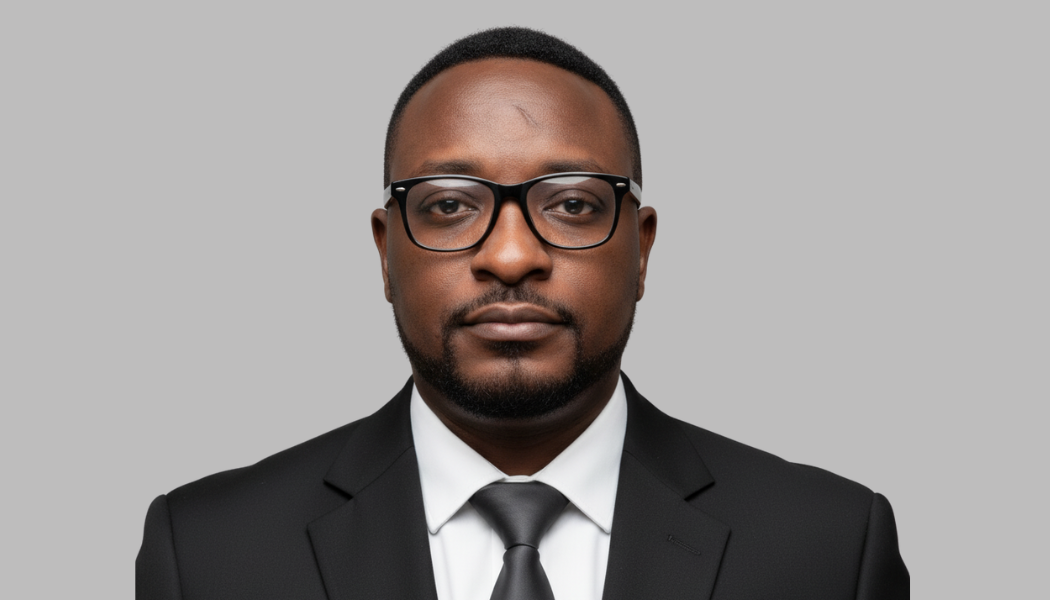
Bridge Africa Technologies has announced the appointment of Mr. Oludayo Sofoluwe as one of the judges for the BAT Hackathon 2022, a decision that sends a clear signal about the depth and seriousness of this year’s competition.
With more than two decades of hands-on experience in offshore oil and gas, subsea systems, and field operations, Sofoluwe represents exactly the kind of grounded, real world expertise that BAT wants at the judging table. His involvement tells participants that their ideas will be assessed by someone who understands not just theory, but the realities of complex engineering environments, deepwater operations, and long term asset performance.
For developers, startup teams, students, and innovators preparing to submit subsea tools, digital solutions, or energy optimization ideas, his name on the judging list is a strong assurance that their work will be reviewed by a professional who has lived through the types of challenges they are trying to solve.
A Career Built Across the Full Field Lifecycle
Mr. Sofoluwe’s career covers the full arc of modern field development, from subsurface studies and facilities design to commissioning, operations, and long term maintenance. That breadth is what makes his profile stand out.
After earning a B.Eng. in Mechanical Engineering from the University of Ilorin, he built a strong technical foundation working in project and facilities roles. At Nigerian Agip Oil Company (NAOC), he served as a Projects and Facility Engineer, involved in well hook ups, flowline and pipeline projects, and process facility developments. There, he handled work from design through construction, installation, commissioning, and handover. This early phase of his career exposed him to the full project lifecycle, the reality of field constraints, and the need to balance design ambition with constructability and safe operations.
He then moved into reservoir and petroleum engineering functions, sharpening his analytical and systems thinking skills. As a Reservoir Engineer at Sterling Global Oil Resources Ltd, he worked on exploration and development studies, field data analysis, well testing and interpretation, and engagements with regulators and partners. That role demanded a detailed understanding of how reservoirs behave over time and how engineering decisions at the surface translate into production performance and resource recovery.
At Waltersmith Petroman Oil Ltd, he served as a Facilities and Petroleum Engineer, contributing to flow station upgrades, gas lift compression and distribution systems, and technical support services. This mix of surface facilities work and production support helped him understand where energy is lost, where downtime creeps in, and how better systems design can unlock higher uptime and smoother operations.
His portfolio took a decisive subsea and offshore direction when he joined TotalEnergies EP Nigeria. Over the years, he has occupied several strategic roles that now define his profile as a subsea and offshore specialist.
As a Subsea Support Engineer, he served as an offshore focal point for subsea operations and interventions. He provided technical assistance to offshore teams, analysed and reported on subsea issues, and contributed to health, safety and environment procedures and SIMOPS practices in the field. This role placed him in the heart of live operations, where decisions affect safety, production, and equipment integrity in real time.
He later became Egina Project Commissioning Site Leader for subsea production systems. In that position, he was responsible for the overall commissioning and start up of subsea systems on one of Nigeria’s significant deepwater developments. He coordinated multiple teams, shaped commissioning strategies, and ensured that complex operations were executed in a safe, structured, and traceable way. Commissioning subsea systems at that scale requires a strong command of technical details, firm leadership, and the ability to manage risk without slowing down progress.
As Senior Subsea Projects and Methods Engineer, he focused on improving work methods, preparing and executing special projects, resolving integrity threats, and facilitating the adoption of technologies that reduce operating costs while increasing equipment availability. This role sits at the junction of innovation and reliability, where new tools and approaches are evaluated not just for novelty, but for their impact on operations and lifecycle costs.
His current path at TotalEnergies EP Nigeria up to 2022 includes serving as Subsea Maintenance Manager and Life of Field Manager. In this capacity, he is responsible for routine and non routine subsea maintenance activities, subsea interventions, life of field contracts, and technical support to new and special projects. The work requires strong attention to HSE performance, asset integrity, and equipment availability, as well as the ability to coordinate contractors, internal teams, and offshore crews around shared objectives.
Overlaying this rich experience is his MSc in Petroleum Engineering from Heriot Watt University in the United Kingdom, which strengthened his technical grounding in reservoir behaviour, production systems, and integrated field development.
Taken together, these roles give him a rare end to end view. He understands what happens in the reservoir, how facilities are designed and built, how subsea systems are installed and commissioned, and how those same systems must be monitored, maintained, and renewed across their life of field.
Why He Is a Perfect Fit for BAT Hackathon 2022
For BAT Hackathon 2022, Mr. Sofoluwe will be focusing on three judging categories that align directly with this journey: Offshore Engineering and Subsea Operations Innovation, Energy Systems Optimization and Production Efficiency, and Safety, Asset Integrity, and Engineering Risk Management.
Offshore Engineering and Subsea Operations Innovation
BAT expects strong participation in ideas related to subsea engineering tools, underwater robotics, remote inspection, digital twins for subsea assets, and remote operations for offshore fields. In a space like this, a judge must be able to separate what merely sounds impressive from what can survive saltwater, pressure, logistics constraints, and long term operations.
This is where his subsea background is particularly valuable. His years as Subsea Support Engineer, Egina Project Commissioning Site Leader, Senior Subsea Projects and Methods Engineer, and Subsea Maintenance Manager mean he has seen subsea systems from design reviews to installation, from first oil to mid life interventions. He understands subsea control systems, hydraulic and electrical distribution, subsea trees, manifolds, and umbilicals, as well as how faults show up in real operations.
When a team proposes a new subsea sensor configuration, an underwater inspection robot, or a remote intervention concept, he can quickly tell if the design respects installation realities, vessel time, weather windows, and intervention cost. He knows how unreliable access or poor maintainability can wipe out the initial attraction of a new tool. This ability to test ideas against real offshore conditions is exactly what BAT wants in this category.
Energy Systems Optimization and Production Efficiency
Another key category in this year’s hackathon is focused on improving production uptime, streamlining field operations, and achieving better use of energy and infrastructure. This includes digital tools for production monitoring, optimization algorithms, smarter use of compression and gas lift, and workflow automation for field operations.
Mr. Sofoluwe’s experience naturally fits here. His work as a Projects and Facility Engineer at NAOC, dealing with well hook ups, flowlines, and process facilities, gave him insight into where energy is wasted and where bottlenecks form in field facilities. His time as a Reservoir Engineer sharpened his understanding of how production strategies, well performance, and reservoir responses affect overall field output.
At Waltersmith Petroman Oil Ltd, his involvement in flow station upgrades and gas lift compression and distribution projects connected subsurface and surface perspectives. He saw firsthand how better designed systems can improve production stability, reduce flaring, and improve energy use.
In his subsea roles at TotalEnergies, he has been tasked with improving equipment availability and reducing operating costs. This often means rethinking maintenance methods, adopting smarter monitoring, and aligning operations and engineering teams around data driven decisions.
When he sits with BAT Hackathon submissions in this category, he is not looking only for a clever dashboard. He is looking for ideas that understand the link between field data, physical equipment, cost, and safety, and that recognise the realities of implementation in brownfield and greenfield settings.
Safety, Asset Integrity, and Engineering Risk Management
The third judging category assigned to him is focused on safety, integrity, and risk. BAT expects to see solutions that address inspection technologies, predictive maintenance, risk reduction frameworks, improved SIMOPS planning, and tools that make high risk environments safer for people and assets.
Safety and integrity are central themes throughout his career. As Subsea Maintenance and Life of Field Manager, he deals daily with the consequences of corrosion, fatigue, equipment aging, and operational stresses. His mandate includes protecting subsea assets that are difficult and costly to access, which means getting integrity and maintenance strategies right.
During the Egina subsea commissioning campaign, he bore responsibility for a phase where the risk profile is high and the margin for error is small. Coordinating multiple teams around commissioning sequences, ensuring proper testing, and respecting HSE procedures are not theoretical tasks. They involve constant decisions about what can proceed, what needs to pause, and how to protect people and equipment without stalling progress.
In his earlier role as Subsea Support Engineer, he contributed to the development and refinement of HSE procedures and SIMOPS practices, particularly where subsea operations interact with production activities and marine operations. This experience means he is sensitive to risk interfaces, not just isolated hazards.
As a judge, he will bring that mindset to BAT Hackathon projects that claim to improve safety or integrity. He will look beyond marketing language to see whether a solution genuinely reduces risk, is practical at the worksite, and can be integrated into existing procedures without creating new blind spots.
Leadership, Judgement, and Mentorship
Technical depth is only part of what makes a strong judge. BAT also sought someone who could exercise sound judgement, engage with teams constructively, and recognise potential even in early stage ideas.
Throughout his career, Mr. Sofoluwe has worked at the intersection of offshore crews, onshore engineering teams, management, and external stakeholders. As Egina Commissioning Site Leader, he aligned project teams, contractors, and offshore personnel around a shared commissioning roadmap. As Senior Subsea Projects and Methods Engineer, he helped drive method improvements and manage special projects that required negotiation, consensus building, and careful communication.
His current responsibilities in subsea maintenance and life of field management up to 2022 mean that he is accustomed to making decisions that affect production, cost, and safety. These decisions are rarely simple. They demand a calm reading of risk, a respect for procedures, and the discipline to challenge assumptions when necessary.
For young engineers and startups entering BAT Hackathon 2022, this combination of experience and temperament is important. It means that ideas will be evaluated with both rigor and fairness. It also means that feedback from the judging panel can become a learning moment, not just a verdict.
A Call to Innovators Across Africa
By appointing Mr. Oludayo Sofoluwe as one of the judges for BAT Hackathon 2022, Bridge Africa Technologies is sending a clear message: this is not a casual innovation contest. It is a focused platform for ideas that can stand up to real field conditions, safety expectations, and operational constraints.
For teams working on offshore tools, subsea systems, production optimization software, inspection technologies, or safety solutions, his presence on the panel is an invitation to raise their game. He understands how a small improvement in equipment availability can translate into major production gains, how a better operational workflow can reduce risk at the worksite, and how engineering ideas must align with long term asset integrity.
BAT Hackathon 2022 is open to engineers, developers, startup founders, data scientists, and students who want to solve real problems facing energy and industrial operations in Africa. The appointment of judges like Mr. Sofoluwe shows that submissions will not be evaluated in a vacuum. They will be reviewed against the lived experience of professionals who know what it takes to keep complex systems running safely and efficiently.
For participants, that should be encouraging. It means that if your solution addresses a genuine operational pain point, if it respects safety and integrity, and if it can fit into real workflows, it will be recognised and understood.
As the hackathon approaches, Bridge Africa Technologies invites innovators across the continent to bring bold, practical, and meaningful ideas to the table, confident that judges such as Oludayo Sofoluwe will evaluate their work with depth, fairness, and a clear view of the future of engineering in Africa.