

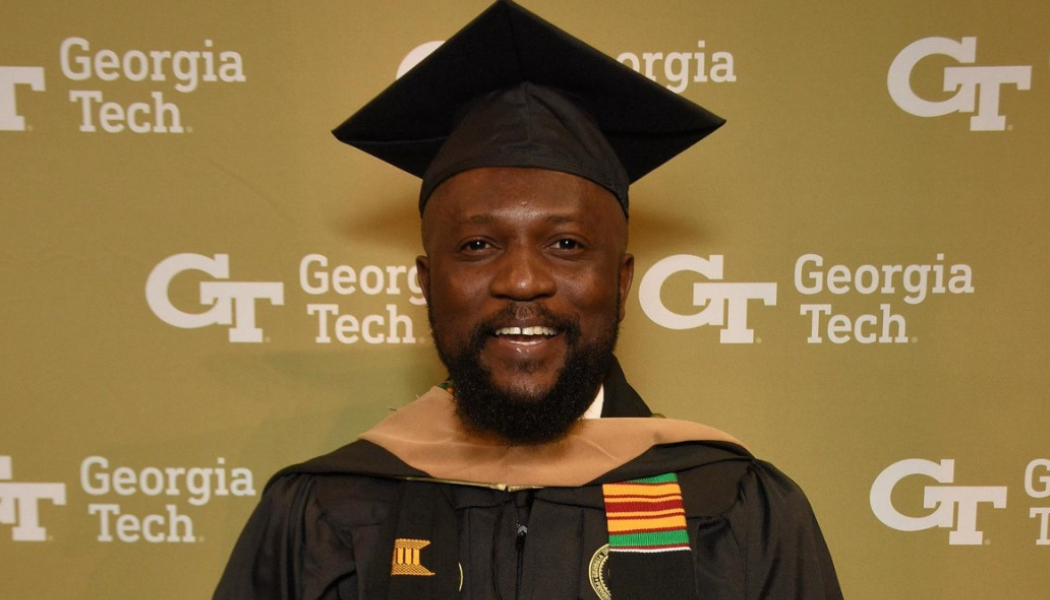
Recognised among 15 nominees and ranked in the top 3 winners for his leadership in building a domestic EV battery supply chain and transforming global operational systems
The main hall of the BAT International Conference 2025 remained lively as the final award of the evening was announced. Attendees, including innovators, leaders, and industry professionals, gathered to recognise key contributions in technology and operational excellence. When Engr. Habeeb Ilufoye was named the winner of the BAT Excellence in Supply Chain Innovation Award 2025; the applause reflected a clear acknowledgement of his meaningful work and its relevance to ongoing national priorities.
Habeeb emerged as one of the top 3 winners from a competitive pool of 15 nominees who went through a rigorous judging process. The panel evaluated technical depth, innovation, real-world impact, and long-term significance. His selection was driven by a combination of engineering expertise, strategic clarity, and a body of work that reflects both national and global importance.
To the wider audience, his win may look like a moment in an award ceremony. In reality, it is the latest milestone in a career shaped by careful thinking, technical depth, and a commitment to building systems that strengthen resilience. As the hall settled, it became clear that this recognition was not simply about one project but about a journey that has interwoven engineering, strategy, digital transformation, and supply chain innovation.
This moment provides the perfect entry point into the professional story of a leader whose work is steadily reshaping how supply chains are built, automated, and secured.
Engr. Habeeb Ilufoye’s path into global operations and supply chain innovation began long before he entered the executive space. His foundation was built on engineering discipline, analytical thinking, and a drive to understand complex systems. With a Bachelor’s degree and later a Master’s degree in Chemical Engineering from Ahmadu Bello University and the University of Lagos, he formed a technical base that shaped how he sees problems and solutions. The engineering mindset never left him. It continues to influence how he structures teams, evaluates systems, and designs operational frameworks.
The early years of his career involved delivering complex engineering projects that required both precision and strong project execution. These experiences shaped his approach to work. He learned to focus on structure, clarity, and feasibility. They also gave him firsthand exposure to the challenges that arise when technical systems interact with human decisions and operational constraints.
As he gained experience, he moved beyond traditional engineering roles into strategy, marketing, business development, and project leadership. This transition widened his lens. He was no longer only interpreting systems from an engineering perspective. He began shaping business models, enabling teams, and connecting technical insights with commercial realities. This ability to bridge perspectives would later become one of his strongest professional advantages.
When digital transformation began reshaping industries across Africa, Habeeb stepped directly into the momentum. He led multimillion dollar initiatives across education, hospitality, and automotive sectors, translating ideas into systems that scaled across regions. At Nexford University, he designed and built a global reseller program that stretched across three continents. This achievement required precise execution, deep customer insight, and a clear understanding of how digital ecosystems operate in different markets.
His work at Amazon marked another significant chapter. As Senior Vendor Manager, he managed a high value portfolio and consistently delivered results that reflected disciplined strategy. Under his leadership, the portfolio recorded a significant year over year growth. He also secured a rise in incremental profit by using data driven insights and AI supported negotiation frameworks. These outcomes reflect a habit of building systems that work. They also show his commitment to using data as a central tool for decision making.
Throughout his career, his guiding principle has remained consistent. Intelligent systems thrive when data is respected, clarity is prioritized, and teams are empowered to operate with precision. He envisions operational ecosystems that are automated, self improving, and free from avoidable friction. His work consistently moves in that direction.
Spotlight on the EV Battery Supply Chain Initiative
Among all the achievements in Habeeb’s portfolio, his ongoing national interest research stands out for its depth, ambition, and strategic value. His leadership of the initiative titled Establishing the Domestic Electric Vehicle Battery Supply Chain reflects a rare combination of technical expertise and national economic insight.
The project focuses on developing a domestic supply chain for EV grade lithium iron phosphate battery materials. The goal is not simply to participate in the global EV ecosystem but to secure a position that ensures national resilience. This research touches energy, manufacturing, trade policy, and long term industrial competitiveness.
At the center of this initiative is the Domestic LFP Supply Chain Acceleration Framework, a structured model he developed to accelerate sourcing, validation, regulatory alignment, and incentives for domestic production. The framework identifies high purity precursor suppliers, outlines the standards required for scalable production, and supports cross agency coordination. The model is built to ensure that every part of the chain aligns with international safety and quality expectations.
Habeeb’s work involves close collaboration with government agencies on regulatory requirements and incentive structures. He has contributed to analyses that strengthen national energy independence and support the broader EV adoption goals tied to the Inflation Reduction Act and the Bipartisan Infrastructure Law. These policies reflect national priorities, and his research aligns directly with them.
What makes this initiative significant is its forward looking design. Rather than focusing on temporary gains, it builds long term capacity. It gives policymakers, manufacturers, and investors a structured pathway that supports both innovation and continuity. His work sets the foundation for an industry that can create jobs, reduce reliance on external supply streams, and position the nation as a contributor to the future of clean energy technologies.
This initiative was a major factor in his selection for the BAT Excellence In Supply Chain Innovation Award. The judges saw not just the research but the strategic clarity and national value embedded in the work.
Why He Won the BAT Excellence In Supply Chain Innovation Award
Each year, the BAT Excellence In Supply Chain Innovation Award is reserved for individuals who demonstrate a clear track record of transforming supply chains, improving systems, and shaping industry direction. With 15 nominees shortlisted in 2025, the field was competitive. The evaluation process assessed depth of expertise, innovation, sustainability, long term relevance, and evidence of real operational impact.
Habeeb met each criterion with convincing clarity.
His engineering background provided a strong technical foundation. His leadership across strategic and digital transformation roles demonstrated adaptability. His work at Nexford showed he could build systems that scale. His portfolio performance at Amazon proved operational mastery. Most importantly, his EV battery supply chain research reflects direct national relevance at a time when global energy systems are rapidly shifting.
A key reason he ranked among the top 3 recognised winners is the intersection of three strengths: engineering depth, strategic intelligence, and an instinct for building systems that last. Few nominees combined these strengths in the same way.
His contributions directly support national energy resilience, create pathways for industrial advancement, and align with global sustainability targets. The judges acknowledged his ability to create practical and scalable solutions rather than theoretical blueprints. This clarity of execution strengthened his position within the final rankings.
The award recognizes leaders who are already shaping change and those positioned to influence the next decade of supply chain systems. Habeeb fits squarely into both categories.
Beyond his direct contributions, Habeeb’s influence is evident in his thought leadership roles and professional fellowships. He serves on editorial boards for international academic journals, contributing insight at the intersection of technology, strategy, and operational systems. These roles show a willingness to guide research communities and support new knowledge creation.
He has also participated in the Georgia Climate Conference, a platform that gathers researchers, policymakers, and industry experts working to address climate resilience and sustainability. His involvement reflects his understanding that supply chains and climate strategy are linked.
Habeeb is a Fellow of the Chartered Institute of Information and Strategy Management, the Commonwealth Academy of Leadership and Management, and the Institute of Management Consultants. These fellowships show recognition from respected professional bodies that acknowledge his impact and leadership potential.
His perspective on global supply chains is shaped by a belief that systems must be automated, resilient, and capable of learning from data. He sees operational inefficiencies as solvable problems and views intelligent automation as a necessary foundation for future competitiveness. This mindset influences how he designs frameworks, assesses system weaknesses, and guides organizations toward stronger performance.
His contributions reflect a leader who combines technical literacy with strategic clarity, and who understands the long term implications of decisions made today.
As the applause settled inside the BAT International Conference hall, one thing was clear. The recognition given to Engr. Habeeb Ilufoye was not a celebration of a single achievement but a statement about the kind of future the BAT Awards aim to promote. His work sits at the intersection of engineering, policy, and global operations. It shapes how nations think about clean energy, how organizations build resilience, and how technology strengthens supply chains.
His win signals a future where innovation is tied to responsibility. It underscores the value of leaders who understand both the technical depth and strategic scale of the challenges ahead. With his ongoing work on EV battery supply chains and his broader contributions across digital transformation and global operations, Habeeb stands as one of the figures shaping the direction of supply chain systems for the coming years.
The BAT Excellence In Supply Chain Innovation Award 2025 reflects a moment of recognition. What happens next will likely extend its significance. His work will continue to influence conversations around automation, energy, and supply chain resilience. It will also inspire the next generation of professionals who are preparing to build and safeguard the systems that keep industries and nations moving.
For the BAT community, this recognition sets the tone for the next award cycle. It reminds innovators, leaders, and researchers that forward looking work matters. It reinforces the value of deep technical insight paired with strategic ambition. Most importantly, it highlights the role individuals like Habeeb play in building stronger and smarter pathways for the future.
As the lights dim on this year’s ceremony, the message is clear. This is not the end of a journey. It is a signal that the work ahead carries even greater possibilities. Engr. Habeeb Ilufoye’s recognition is a testament to what can be achieved when engineering discipline meets global perspective, and when innovation is guided by purpose rather than trend. The impact of his work will continue to grow, shaping supply chain transformation and contributing to a stronger technological future.